The Best Goalkeepers by Peer Rank: Who Leads Awareness, Catching, Parrying, Reach and Reflexes
Goalkeeper cards have five stats of their own, and among the 63 Indexable Goalkeepers no single card leads all of them. We ranked each at max level to show which keeper is best at which part of the job.
Goalkeepers are the position where a single bad choice costs the most. An outfield player who underperforms is covered by his teammates, but a keeper who cannot handle shots turns every opposition attack into a possible goal. Goalkeepers also use a different set of stats from everyone else, so the usual advice about overall rating and pace does not apply. In this guide we rank every goalkeeper card on this site on the five goalkeeping stats.
How the ranking was built
The Peer Group is every Indexable Card that plays goalkeeper, whatever its card type, and at the time of writing it has 63 cards. Each card is built with the automatic Max OVR build at max level, in neutral condition, with no skills and no manager. We rank them on the five goalkeeping stats: GK awareness, GK catching, GK parrying, GK reflexes and GK reach. Ties share a place. The figures come from the live catalogue on 19 November 2026 and will change as new cards are added.
What each stat does
GK awareness is how well the keeper reads the play and positions himself before the shot comes. GK catching is the ability to hold on to the ball, GK parrying is how well he pushes it away from danger, GK reflexes is the speed of reaction to close shots, and GK reach is how far he can stretch to a ball that is out of his immediate area. They overlap, but they do not move together.
GK awareness: a crowded top
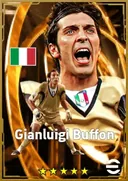
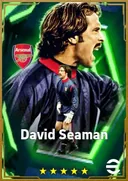
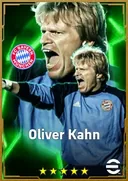
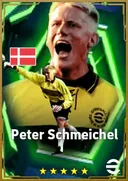
Gianluigi Buffon and two Petr Čech cards share first with 98. Thirteen more cards share fourth on 97, including David Seaman, Oliver Kahn (four cards), Peter Schmeichel (two cards), Narazaki Seigo and more cards of Buffon and Čech. Awareness is bunched very tightly, and that means it is a poor tie-breaker. If two keepers both sit in the top group of awareness, the choice is made elsewhere.
Catching and parrying
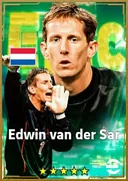
For catching, Čech is first with 94. Five cards share second on 93: two David Seaman cards, Edwin van der Sar and two Buffon cards. Catching is the stat that stops rebounds, so the top of this table is where you look if you want a keeper who rarely gives the striker a second chance.
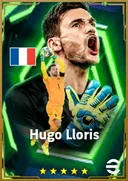
Parrying has a different leader. Edwin van der Sar and Peter Schmeichel share first with 93, then four cards share third on 92: a second van der Sar card, a Buffon card, Hugo Lloris and a second Schmeichel card. Van der Sar and Buffon are the two keepers who appear among the leaders of both catching and parrying, which makes them the most balanced shot-stoppers.
In my own matches I cannot tell the difference between a keeper who catches well and one who parries well, so I do not choose between them on that. I would not pay extra for one over the other.
Reach and reflexes
GK reach is the most crowded table of all. Eight cards share first on 93: Seaman, Buffon, two Iker Casillas cards, Kahn, Schmeichel and two Čech cards. Reach is the stat that lets a keeper stretch to the corner, but with eight cards equal at the top it does not separate the best from the rest, so use it only as a minimum requirement.
Reflexes show the strongest single leader. Kawaguchi Yoshikatsu is first with 98. Čech is second on 97 and a second Čech card is third on 96. Four cards share fourth on 95: two Buffon cards, Hayakawa Tomoki and Casillas. For close-range shots, which are the ones you cannot position for, this is the table that matters most, and the Čech cards and Kawaguchi lead it clearly.
Is there a complete goalkeeper?
Čech comes closest. His main card is first in catching, second in reflexes, joint first in awareness and joint first in reach. Buffon is the second most complete: first in awareness and reach on his newest card, second in catching, third in parrying and in the fourth group for reflexes. Schmeichel and van der Sar lead parrying, and Schmeichel also shares the reach lead, but neither leads reflexes or catching.
This matters because the five stats do not cost the same in play. Most goals against come from close-range shots, where reflexes and parrying decide the outcome, while crosses and long shots depend more on awareness and reach. The right keeper depends on how your defence concedes chances, not on which name looks best.
A note on small margins
Across all five tables the gaps are very small. The difference between first and third place is one or two points in every stat, and in reach eight cards are level at the top. That is a sign of how tightly goalkeeper cards are designed, and it means you should not spend money or progression points chasing a single point of awareness. Look for the keeper whose weakest stat is still near the top, because a keeper with one low number is easier to beat than one with five good ones.
Choosing a keeper with these tables
If your defence is strong and lets few shots through, but the ones that come are clear chances, pick from the reflexes leaders. If your team gives up many shots from distance, choose a keeper high on awareness and reach. If you concede a lot of rebounds, look at catching. Open the player pages to compare versions, because Buffon, Čech, Schmeichel, Kahn and van der Sar each have more than one card with different ranks.
As always, the automatic build has no skills or manager. A different training plan can move any of these stats, so use the ranks as a like-for-like starting point.
The thing the Peer Ranks capture least about a goalkeeper is positioning and how well he reads shots. Awareness is ranked, but the number does not show how he behaves in a real match.
Cards mentioned in this guide