The Best Centre-Forwards by Peer Rank: Finishing, Pace and Power Compared
Out of 302 Indexable Centre-Forwards, which cards really lead on finishing, awareness, pace, kicking power and strength? We ranked every one at max level and the leaders change from stat to stat.
Many striker lists rest on a headline overall rating and someone's opinion. In this guide we do something different. We take every Epic, Big Time and Show Time card that plays centre-forward on this site, push each one to its maximum level with the automatic build, and rank them against each other on the six stats that matter most for the position. The result is a Peer Rank per stat, and the leaders differ from table to table.
How the numbers were produced
Our Peer Group for this guide is every Indexable Card that plays centre-forward, whatever its card type. At the time of writing that is 302 cards. Each card is built with the automatic Max OVR build at max level, in neutral condition, with no skills and no manager. That is the same build you see in the Peer Rank panel on a player page. Ties share a place, so two cards on the same value are both ranked equal. A Peer Rank of 1st of 302 means no other centre-forward card has a higher value in that stat.
The six ranked stats for centre-forwards are finishing, offensive awareness, speed, acceleration, kicking power and physical contact. We do not rank every attribute because most of them barely change how a striker plays. The numbers below were read from the live catalogue on 19 November 2026 and can move when new cards are added.
Finishing: Henry leads, Mbappé second, then a crowd
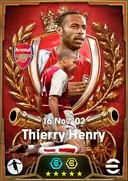
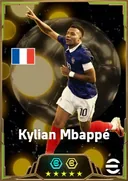
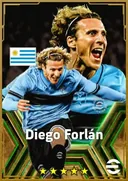
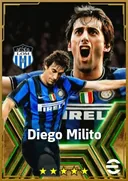
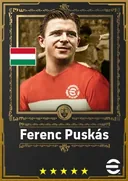
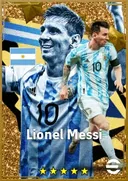
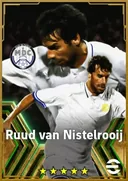
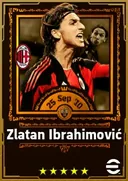
The top finisher in the group is Thierry Henry, with 99 finishing. Kylian Mbappé is second on 97. Then comes a crowd: eight cards share third place on 96, including Alessandro Del Piero, Diego Forlán, Diego Milito, Ferenc Puskás, Filippo Inzaghi, Lionel Messi, Ruud van Nistelrooij and Zlatan Ibrahimović. Out of 302 cards, only ten reach 96 or more. Finishing is bunched at the top, so if you are choosing between those ten, finishing alone should not decide it. Look at the other stats instead.
This is where a Peer Rank is more honest than a rating. A rating blends everything together, so a card can be high because of pace and still finish worse than a slower card. Ranking each stat separately lets you see who is actually best at the thing you need.
Offensive awareness: Inzaghi, again and again
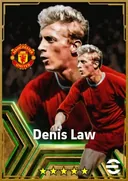
The offensive awareness table looks nothing like the finishing table. Filippo Inzaghi holds first place with 102, a second Inzaghi card is next on 101, and a third is on 99. Denis Law and one more Inzaghi card share fourth on 98. That is four different Inzaghi cards in the top five cards for the stat. Awareness drives the quality of your striker's movement, so the cards at the top are the ones that find space without your help.
Inzaghi's best cards do not lead finishing, although one of his cards is in the group on 96. A card can be a fox in the box and still not be among the most accurate shooters. If you play a poacher style and rely on timing runs, awareness may matter more to you than the last point of finishing.
My own view: on a striker I value finishing more than offensive awareness. A striker who finishes well turns the chances he gets into goals, so finishing is the first number I check.
Speed and acceleration: the pace leaders
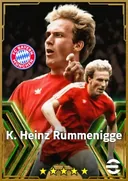
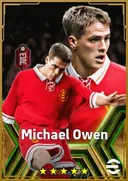
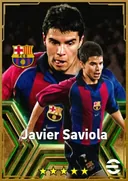
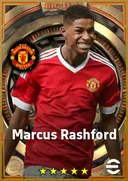
For top speed, Karl-Heinz Rummenigge is first on 97. Two Samuel Eto'o cards share second on 95. Four cards share fourth on 94: two more Rummenigge cards, Michael Owen and a third Eto'o card. For acceleration, Michael Owen and two Samuel Eto'o cards share first with 100, and Javier Saviola and Marcus Rashford share fourth on 99.
Eto'o is the one name that sits near the top of both pace tables with several different cards. Speed and acceleration are different things in play: speed decides who wins a long race, acceleration decides who wins the first three steps. A striker who is first off the mark but slower over distance gets his goals from short bursts behind the line.
Kicking power and physical contact
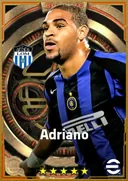
Kicking power is a narrower table. Two Adriano cards lead with 97. Third place on 94 is shared by another Adriano card and three Diego Forlán cards. Kicking power controls how hard long shots and finishes are hit, and Adriano and Forlán are the two names that own this table.
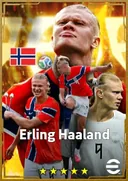
For physical contact, Diego Costa and Jan Koller share first on 95, Didier Drogba is third on 93, and five cards share fourth on 92: another Drogba card, Erling Haaland, two more Koller cards and Zlatan Ibrahimović. Physical contact decides how well your striker holds the ball against a defender. Costa and Koller are the target men on these numbers, and Ibrahimović is the one who combines strength with strong finishing.
How to use this when you choose a card
Start with the playing style you want. For a fast runner in behind, pick from Rummenigge, Eto'o and Owen and check the finishing rank before you decide. For a poacher, start from the awareness table. For a target man, start from physical contact and kicking power. Then open the player pages and compare the card against the other cards of the same player, because several players on these lists have many cards and their ranks differ between versions.
Remember what the build assumes. Peer Ranks use the automatic build, no skills and no manager. If you plan a different training allocation or a booster, the stat you care about can move, and a card that ranks 4th here could rank higher after your own plan. Treat the Peer Rank as a fair starting line, not as the final answer.
In my own matches the type of striker I find most useful is the poacher, the card that does its work in the box with good awareness and finishing. That is the type I would start from when choosing a card from these tables.
Cards mentioned in this guide