The Best Centre-Backs by Peer Rank: Who Really Leads on Defending, Aggression and Strength
We ranked all 108 Indexable Centre-Backs at max level on the stats that decide defending. The leaders on awareness, tackling, aggression, heading and physical contact are different cards, and that changes how you should pick a defender.
Choosing a centre-back by overall rating is the easiest way to end up with a defender who looks good on the team sheet and loses duels. Defending is made of several separate skills, and no single card leads all of them. In this guide we rank every centre-back card on this site against its peers, stat by stat, so you can see who is actually best at each part of the job.
What a Peer Rank measures here
Our Peer Group is every Indexable Card that plays centre-back, whatever its card type. Right now that is 108 cards. Each one is built with the automatic Max OVR build at max level, in neutral condition, with no skills and no manager, and then ranked on the stats that matter for the position: defensive awareness, tackling, aggression, defensive engagement, heading and physical contact. Ties share a place. These figures were read from the live catalogue on 19 November 2026 and will change as new cards are added.
Defensive awareness: Baresi on top
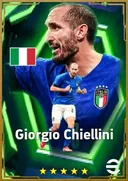
Defensive awareness decides whether a defender reads the play and gets into position before the attacker arrives. Franco Baresi is first with 102, and two other Baresi cards share second on 101. Behind them, six cards share fourth place on 100: three Alessandro Nesta cards, Carles Puyol, Giorgio Chiellini and Leonardo Bonucci. Baresi owns the top three cards in this table, which shows how much he stands out on reading the game.
Notice how many Italian defenders sit in this table. The cards at the top are the ones built around anticipation, not around size, and that is a different kind of defender from the physical type you will see further down.
Tackling: a three-way tie at 101
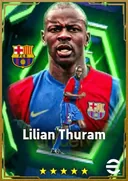
Tackling has a three-way tie for first place on 101: Fabio Cannavaro, Franco Baresi and Lilian Thuram. Twelve cards share fourth on 100, including six Nesta cards, two Puyol cards, two more Cannavaro cards, Pepe and Sol Campbell. The top of this table is very crowded, so tackling alone will not help you separate defenders. If your shortlist has several cards in the 100 to 101 range, the stat that breaks the tie is usually somewhere else.
Baresi is the one card that leads defensive awareness and also shares the lead for tackling. If you want a pure reader of the game who also wins the ball, that makes him the card to check first.
The defender type I rely on most is the reader, the high awareness, high tackling kind that the Baresi, Nesta and Chiellini group represents in the tables above.
Aggression: Pepe stands alone
Aggression is the clearest case of one defender separating from the group. Pepe is first with 105, and his second card is second with 102. Two Carles Puyol cards share third on 101. Aggression controls how quickly and how hard a defender goes in for the ball. It helps win the ball early, but it also makes a defender more likely to be pulled out of position or to give away fouls, so a high number is not automatically better for every player.
Heading and physical contact
Heading has the largest gap of any table in this guide. Daniel Van Buyten leads with 96, while the next best, Gabriel Magalhães, is on 92. Per Mertesacker and Tulio share third on 90. A four-point lead is rare, and it makes Van Buyten the obvious choice if aerial duels from crosses and set pieces are a problem for your team.
Physical contact has a clear top three. Sol Campbell leads with 97, Daniel Van Buyten is second on 96 and Tulio third on 95. Six cards share fourth on 93: Chris Smalling, two Jaap Stam cards, Medhi Benatia, Pepe and Virgil van Dijk. Physical contact decides who wins the shoulder-to-shoulder battle, so these are the defenders you pick when you face strong strikers. Van Buyten is the one card near the top of both heading and physical contact.
Reading the tables together
If you put the tables side by side, three types of defender appear. The reader is Baresi, Nesta and Chiellini: high awareness and high tackling. The enforcer is Pepe and Puyol: high aggression and tackling. The giant is Campbell, Van Buyten, Stam and van Dijk, led by physical contact and heading. None of them leads every table, and that is the real lesson of the exercise. A defensive line works best when its players cover different tables.
A practical way is to pick one reader and one physical defender as your pair. The reader covers positioning and the physical defender handles the duels. Check the player pages for the other cards of the same player first, because players like Baresi, Cannavaro, Nesta, Puyol and Stam have several cards and their ranks are different between versions.
The limits of the build
Peer Ranks assume the automatic build, with no skills or manager. A different training plan, a booster or a skill can change the numbers a defender reaches, and a card that ranks 4th here may rank higher once you build it your way. The ranking is a fair, like-for-like starting point, not a prediction of how the card plays against a human opponent.
The pairing that works best for me is a reader with a physical defender next to him. The reader covers positioning and the physical defender wins the duels.
Cards mentioned in this guide